
The Ideal Team Player in Service Excellence
Why humility, hunger, and people-smarts must travel together
Service excellence depends on people. Systems provide structure, but culture is lived out through the daily actions of employees and leaders. This is why Patrick Lencioni’s The Ideal Team Player is such a valuable framework. It identifies three attributes that, when present together, create team players who are capable of delivering not only efficiency but care, not only outcomes but moments that matter.
The three attributes are simple to name: humble, hungry, and smart. They are harder to live, and impossible to fake.
Humble: The foundation of trust
Humility is not about lack of confidence or self-erasure. It is about placing the team, the customer, and the shared goal ahead of personal ego. Humble team members share credit, admit mistakes, and show respect to colleagues and customers alike.
In service culture, humility unlocks attentiveness. It makes people willing to truly notice others. Humble staff listen without defensiveness, respond without superiority, and adjust quickly when they are wrong.
Without humility, collaboration crumbles. Teams become competitive in the wrong way, fighting for position rather than focusing on the customer. Customers sense arrogance quickly. It makes them feel dismissed, unheard, or undervalued. Trust cannot thrive in such an environment.
Hungry: The drive to improve
Hunger is the inner drive to do more, learn more, and contribute more. Hungry employees step forward rather than waiting to be asked. They anticipate needs, take initiative, and see challenges as opportunities.
In service culture, hunger translates into anticipation. It is the willingness to go beyond the minimum, to add small touches that customers remember. This is what Will Guidara calls “unreasonable hospitality” – not extravagance, but intentional generosity.
Without hunger, service becomes transactional. Staff may do what is required, but never more. Opportunities to delight are missed, and customers quickly sense the lack of energy. A culture without hunger feels flat and uninspired.
Smart: The ability to connect
Smart, in Lencioni’s model, is not about technical skill or academic intelligence. It is people-smart. It is the ability to read situations, understand dynamics, and respond with emotional intelligence.
In service culture, smart is what makes attentiveness effective. Smart employees pick up on unspoken cues, de-escalate tense moments, and adapt their tone and approach to match the needs of the situation. They know when to lean in and when to step back.
Without smart, even well-intentioned service feels clumsy. Misunderstandings multiply. A comment meant to reassure lands as patronising. Customers leave, not because of what was offered, but because of how it was delivered.
Why all three are required
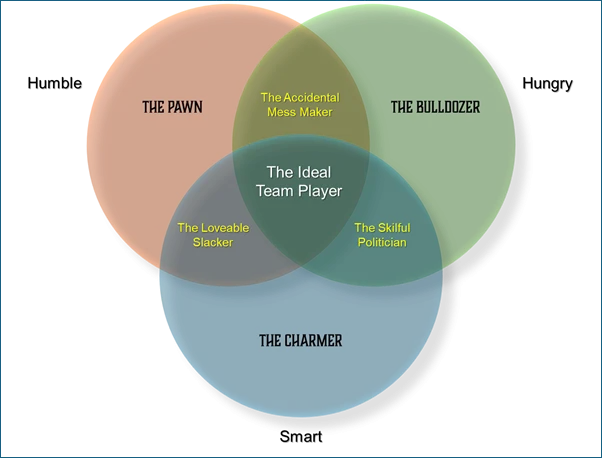
Having one or two of these attributes is not enough. Lencioni is clear that only when humility, hunger, and smartness are present together does a team member truly strengthen the culture. Missing one produces dangerous distortions.
- Humble and Hungry but not Smart: The Accidental Mess Maker
These employees mean well and work hard, but they lack the interpersonal skill to communicate or collaborate effectively. Their hunger drives action, but without people-smarts, they leave confusion or friction in their wake. Customers experience inconsistency, and colleagues spend time cleaning up after them. - Humble and Smart but not Hungry: The Loveable Slacker
These team members are kind, respectful, and good with people, but they lack drive. They avoid conflict and keep the peace, but their absence of hunger leaves gaps in performance. They are pleasant to be around, but they fail to push the team forward. Customers notice service that is polite but uninspired. - Hungry and Smart but not Humble: The Skilful Politician
Perhaps the most dangerous of all. These employees are ambitious and adept at navigating people, but their lack of humility means they put self-interest ahead of the team or customer. They create division, angle for recognition, and undermine trust. Their service may impress in the short term, but it corrodes culture in the long run.
The lesson is clear. Each quality on its own is insufficient. Excellence requires the full set.
Implications for service culture
For organisations that want to deliver moments that matter, this framework is more than a hiring guide. It becomes a culture-shaping lens.
- Recruitment: Hire not only for skill but for humility, hunger, and smartness. Ask questions that reveal attitude as much as aptitude.
- Development: Coach existing staff to grow in the attribute(s) they lack. Someone can learn to be more people-smart with mentoring. Hunger can be nurtured through purpose and ownership. Humility can be modelled by leaders who admit their own mistakes.
- Culture: Celebrate stories that showcase all three attributes in action. Recognition should not only reward outcomes but also the way outcomes were achieved.
The BIAMIC perspective
At BIAMIC, we see humility, hunger, and smartness as essential to our philosophy of service excellence. They align perfectly with the Moments that Matter framework. Humility underpins trust. Hunger drives anticipation. Smart ensures attentiveness is felt.
When all three are present, customers experience care that is consistent, creative, and authentic. When one is missing, cracks appear that no system or process can cover.
Service excellence is not about creating heroes or indispensability. It is about building teams where every player strengthens the culture. The ideal team player is not perfect, but they are humble, hungry, and smart – and that combination makes all the difference.
Make a booking to chat about how this could best serve you.