
The Mirror Effect: Trust, Culture, and the Chain of Service Excellence
Weekly Article – 2025/10/19
“Trust is not a soft skill. It is a hard-edged, economic driver.”
This idea sits at the heart of our Moments that Matter leadership workshop. Inspired by Stephen M.R. Covey’s The Speed of Trust, we explore how trust isn’t just a feel-good value – it’s a force multiplier. High-trust organisations move faster, spend less time managing politics, and respond to change with clarity and confidence. Trust accelerates everything that matters.
But where does trust begin?
Some might say it starts at the top. Others argue it must be earned across time. We believe both are true – and we believe that trust is mirrored throughout an organisation. It’s not just taught. It’s reflected.
This brings us to a principle we return to again and again in coaching and cultural transformation:
The Mirror Principle: The internal reality of your team reflects directly into the experience of your customers. You don’t fix the mirror by polishing the glass — you fix what’s being reflected.
When internal trust is broken, external trust follows. When leaders hide from feedback, teams avoid accountability. When confusion, fear, or control dominate internal dynamics, the service that customers receive will carry that same tone.
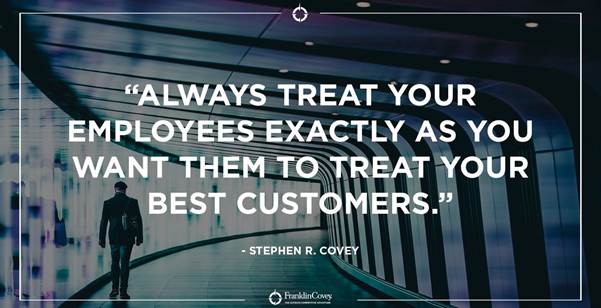
That’s why the statement, “The way you treat your team is the way they will treat your customers,” isn’t merely a nice leadership quote – it’s a systems truth. Your culture leaks. Always.
At BIAMIC, we help leaders shift from command-and-control to trust-and-align. And we start by helping them see clearly. What’s being reflected? What do your team dynamics say about the real values you practice? What gets noticed? What gets ignored? What gets rewarded?
This week’s Culture Challenge is deceptively simple:
Publicly celebrate a specific behaviour you want to see more of.
This isn’t about generic praise. It’s about strategic storytelling – reinforcing the small moments that reflect your values in action. Because what gets celebrated gets repeated. And what gets repeated becomes your culture.
It’s also a week to ask yourself a different kind of question:
What does my team see when they look into the mirror of my leadership?
Because when the internal environment is healthy – when curiosity is alive, when limiting beliefs are challenged, when the right people are celebrated and empowered – then the service feels natural, consistent, human. It doesn’t feel scripted or forced. It feels aligned.
And when that happens, customers notice – even if they can’t explain why.
Make a booking to chat about how this could best serve you.