
Holding the Standard Without Damaging the Relationship
Insights from Crucial Accountability by Grenny, Patterson, Maxfield, McMillan & Switzler
When service excellence falters, the issue isn’t always systems or skills. More often, it’s about missed moments – times when expectations weren’t met and no one said anything. Silence in these moments doesn’t preserve peace – it erodes trust, standards, and culture.
Crucial Accountability offers a blueprint for addressing gaps without damaging relationships. For any organisation serious about culture and service, these principles are essential. They help us confront underperformance, not with blame, but with clarity and care.
Let’s explore the key takeaways.
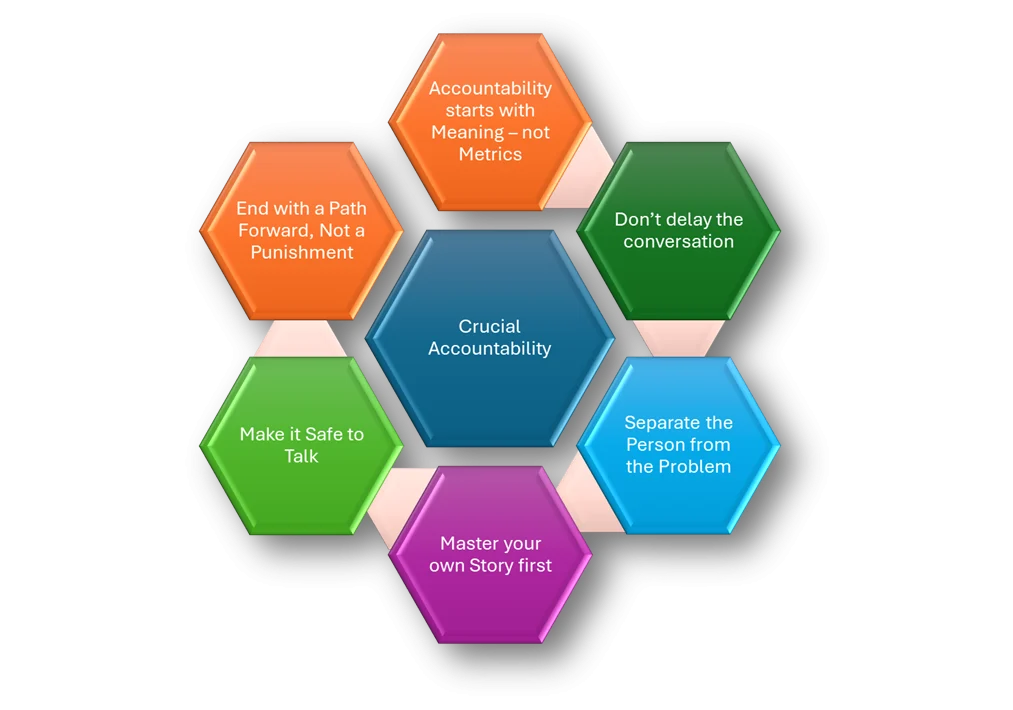
1. Accountability Starts With Meaning, Not Metrics
Too often, accountability is reduced to compliance. But in healthy service cultures, it’s about honouring shared commitments.
Application:
Start conversations by affirming the shared values behind the expectations. For example:
“We both care about how customers feel when they interact with us. That’s why I need to raise this…”
This reframes correction as collaboration – not control.
2. Don’t Delay the Conversation
One of the greatest threats to service culture is hesitation. When problems go unaddressed, they become patterns. And eventually, the culture absorbs and normalises mediocrity.
Application:
Use the “moment that matters” approach: address issues close to when they happen, while memories are fresh and the impact is real.
Delay damages clarity. Speed supports trust.
3. Separate the Person from the Problem
A crucial conversation is not about who someone is – it’s about what happened. The best leaders confront behaviour without attacking identity.
Application:
Use language that describes actions, not traits.
Say: “You missed the service handoff protocol yesterday.”
Not: “You’re careless.”
This subtle shift preserves dignity while upholding standards.
4. Master Your Own Story First
Before holding someone accountable, check your assumptions. Are you framing the gap as disrespect, or simply a miscommunication? Are you clear on what you want from the conversation?
Application:
Ask yourself:
- “What story am I telling myself?”
- “What do I really want – for me, for them, for the team?”
This internal check creates space for grace and clarity.
5. Make It Safe to Talk
People don’t resist accountability – they resist humiliation. If someone feels unsafe, they’ll either withdraw or attack. But if they feel respected, they’ll engage.
Application:
Start with empathy. Acknowledge the person’s contribution before naming the concern. Let them know this is about growth, not guilt.
“You’ve made a strong impact on the team. That’s why it’s important we talk through this together.”
6. End With a Path Forward, Not a Punishment
Service cultures thrive not on blame, but on better. The goal of accountability is always improvement, not retribution.
Application:
Co-create a clear action plan. Ask:
“What support would help you avoid this next time?”
“How can we restore trust in this area?”
Follow up with encouragement, not micromanagement.
Why This Matters at BIAMIC
At BIAMIC, we believe service excellence lives in daily alignment – between what we say matters, and how we act. But alignment doesn’t happen by accident. It requires courageous conversations and compassionate standards.
Crucial Accountability offers the tools to speak up without tearing down. To lead with clarity, not control. And to protect the culture by preserving both standards and dignity.
Because when teams know that issues will be addressed with honesty and care, trust grows. And where there’s trust, there’s excellence.
Want to build a culture where service standards are protected and people are respected? Let’s talk.
Make a booking to chat about how this could best serve you.