
Thinking for a Change – Service Culture Starts in the Mind
Insights from John Maxwell‘s ‘Thinking for a Change‘
When service excellence feels stuck, the problem is rarely a lack of effort. More often, it’s a lack of thinking – about what matters most, what creates value, and what needs to change.
John Maxwell’s Thinking for a Change is a timely reminder that the quality of our thinking determines the quality of our outcomes. And that includes how we serve. When leaders and teams upgrade their thinking, they naturally upgrade the standards and experiences they deliver.
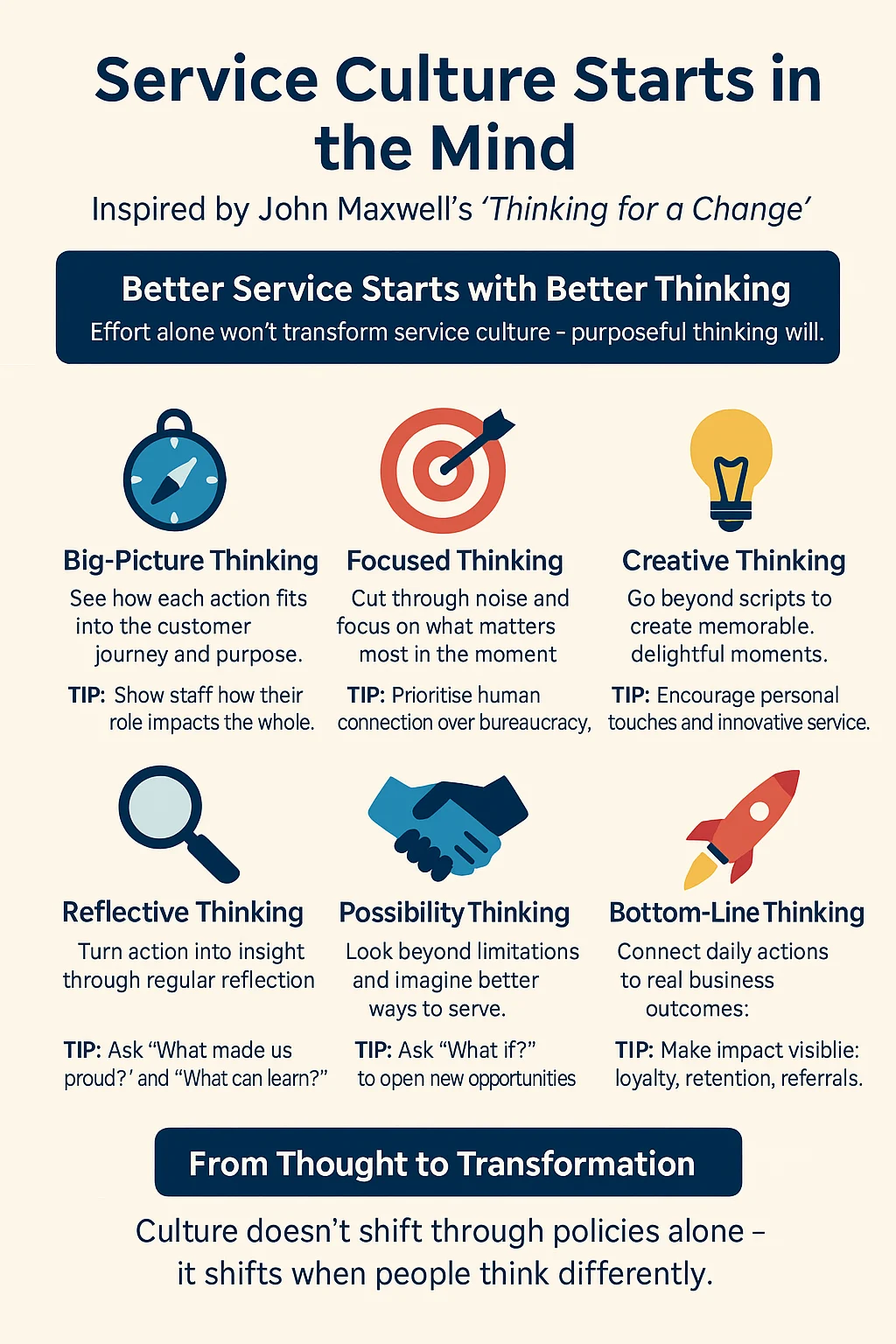
For organisations intent on creating a stronger service culture, here are a few key thinking disciplines that can drive lasting transformation:
1. Big-Picture Thinking
Great service doesn’t come from completing tasks in isolation. It comes from understanding how each interaction fits into a larger narrative – the customer’s journey, the company’s values, and the broader purpose behind the work.
Application: Encourage team members to understand how their work contributes to the whole. Train staff to see beyond their job description. Emphasise that every role touches the customer, directly or indirectly, and that service excellence is everyone’s responsibility. Clarity on the big picture fosters pride and purpose.
2. Focused Thinking
In an environment full of noise and competing demands, focused thinking is a superpower. It allows teams to sift through the distractions and pinpoint what truly matters in a moment of service.
Application: Focused thinking in service means listening carefully, responding thoughtfully, and cutting through unnecessary processes. It’s about prioritising human connection over bureaucracy. Equip teams to recognise service moments that deserve extra attention – not just the urgent ones, but the important ones.
3. Creative Thinking
Rigid service scripts may prevent errors, but they rarely delight customers. It’s the creative touches – the kind that surprise and resonate – that leave lasting impressions.
Application: Encourage innovation at every level. Ask, “How could this experience be even better?” Empower team members to personalise interactions and experiment with new ways to create delight. Let them know it’s okay to colour outside the lines when doing so serves the customer.
4. Shared Thinking
Service culture is not built in isolation. It is forged through dialogue, debate, and shared ownership. Shared thinking invites collaboration, uncovers blind spots, and strengthens trust.
Application: Create time and space for meaningful team conversations. Involve staff in problem-solving and improvement initiatives. Ask powerful questions such as: “What’s working?”, “Where are we losing ground?”, and “What could we try next?”
When teams feel heard, they contribute more – and service improves.
5. Reflective Thinking
In the rush to deliver, teams often skip the crucial step of reflection. But reflective thinking is where learning crystallises and culture matures.
Application: Schedule regular team reviews – not just for metrics, but for meaning. Ask questions like, “What made us proud this week?” or “What was a missed opportunity we can learn from?” Encourage journaling or individual reflection as part of leadership development. Reflection turns action into insight.
6. Possibility Thinking
Some people see limitations. Possibility thinkers see potential. They ask, “What if?” and give others permission to reimagine what’s possible.
Application: Introduce stories and case studies of extraordinary service. Paint a picture of what could be – not just what is. Cultivate optimism and curiosity. Ask, “If we had no constraints, how would we elevate this experience?”
Possibility thinking unlocks progress.
7. Bottom-Line Thinking
Service is not just about smiles – it’s about impact. Bottom-line thinking connects people’s daily actions to tangible outcomes.
Application: Highlight how small service moments ripple into big business results: customer loyalty, retention, referrals, brand reputation, and team morale. Make the invisible visible. When teams see the value they create, they’re more motivated to protect it.
From Thought to Transformation
In Thinking for a Change, Maxwell reminds us that true transformation starts in the mind. Culture does not shift through policies alone. It shifts when people start thinking differently – more purposefully, more creatively, more collaboratively.
This is why BIAMIC’s workshops and coaching don’t merely address surface-level behaviours. They go deeper, helping individuals and teams reframe their understanding of service, leadership, and value. Because when perspective changes, performance follows. Better service starts with better thinking.
Make a booking to chat about how this could best serve you.