
A New Framework for Leadership
Balancing structure and soul in service culture
Leadership in service organisations has always wrestled with a paradox. On one hand, you need the precision of systems: clear processes, accountability, and structures that hold people together. On the other hand, you need the warmth of humanity: empathy, attentiveness, and the freedom to act with care. Lean too heavily in either direction and the balance collapses.
This tension is at the heart of BIAMIC’s framework: The System of the Soul and The Soul of the System. It is not about choosing between efficiency and care. It is about holding both together so that service excellence becomes sustainable and authentic.
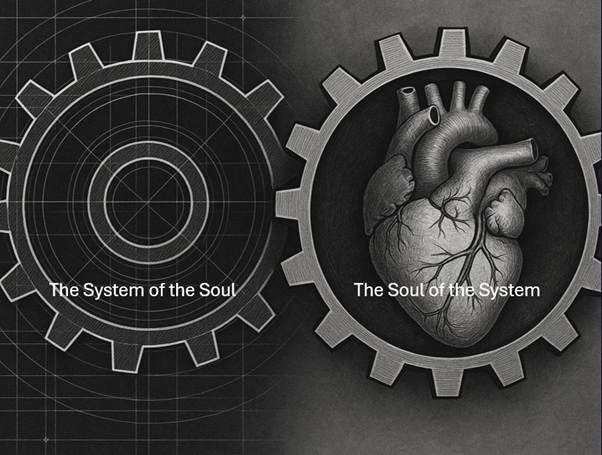
The System of the Soul
The system of the soul begins with the recognition that values on their own are not enough. It is not enough for a company to declare that it values attentiveness, empathy, or responsiveness. If these values are not supported by practical structures, they fade quickly under the pressure of deadlines and competing demands.
A leader who wants empathy to flourish must design a system that makes it possible. For example:
- Time and space for listening. Frontline teams cannot show real care if their schedules allow no margin.
- Clear decision rights. Empowerment only works when people know the boundaries within which they can act.
- Feedback loops. Recognition and reinforcement need to be built into the rhythm of the workplace, not left to chance.
In this way, the system itself becomes a servant of the soul. It ensures that what leaders say they value is embedded into daily practice.
Without this scaffolding, culture drifts. Good intentions are overtaken by urgency, and soon the organisation reverts to old patterns. The system of the soul is the discipline that keeps purpose alive.
The Soul of the System
But structure without soul creates another problem. A system that is efficient but lifeless may deliver compliance, but it rarely inspires loyalty. Customers may receive what they ordered, but not the experience that makes them want to return. Employees may complete tasks, but without a sense of pride or ownership.
This is where the soul of the system is needed. It is the infusion of humanity into structure. Leaders must ask: does this process enable people to care, or does it simply enforce efficiency?
Consider two examples. A script that tells employees exactly what to say may ensure consistency, but it strips away authenticity. A process that offers guiding principles instead allows personality and attentiveness to shine. A rigid approval chain may protect against mistakes, but it often delays action and frustrates customers. A system with clear guardrails and delegated authority allows care to be delivered quickly and confidently.
When systems are animated by soul, they create not just order, but freedom. Employees feel safe to act, and customers feel that the organisation sees them as more than a transaction.
Holding the Balance
The genius of this framework lies in its balance. The system of the soul and the soul of the system are not opposites, but partners. One provides clarity and repeatability. The other provides meaning and energy. Together, they make service excellence both sustainable and memorable.
System without soul is mechanical, cold, and uninspiring. Soul without system is fragile, inconsistent, and unsustainable. System with soul is authentic, repeatable, and deeply human.
Leaders must resist the temptation to resolve the tension. The goal is not to choose one side, but to live in the balance.
What Leaders Can Do
- Audit your systems. Ask whether your current structures enable or restrict care. Where do processes make it harder, not easier, to serve.
- Define non-negotiables. Identify three behaviours that embody your culture. Embed them into routines, recognition, and leadership practice.
- Empower decision-making. Push authority closer to the frontline. Give people clarity on the boundaries so they can act without fear.
- Humanise processes. Replace rigid scripts with guiding principles. Encourage authentic conversation. Simplify approval paths so attentiveness is not delayed.
- Reinforce with stories. Share real examples of employees who embody the balance of system and soul. Stories multiply faster than policies.
Why This Matters
The external customer experience is almost always a reflection of the internal culture. If employees feel constrained, customers will feel it too. If employees feel trusted and supported, customers will notice.
Research shows that engaged employees are more productive, customers served by empowered teams are more loyal, and organisations that intentionally shape their culture achieve higher growth. The system and the soul are not abstract ideas. They are business drivers.
The BIAMIC Perspective
At BIAMIC, we use the Moments that Matter workshops to help leaders and teams find this balance. We show leaders how to design systems that support attentiveness and how to nurture attentiveness that gives life to systems.
The result is not a culture that is either mechanical or sentimental, but one that is practical, human, and capable of producing service excellence at scale.
Excellence is not born in extremes. It lives in the balance between system and soul.
Make a booking to chat about how this could best serve you.