
Blink – Harnessing Intuition for Faster, Smarter Service Decisions
Insights from Malcolm Gladwell’s Blink
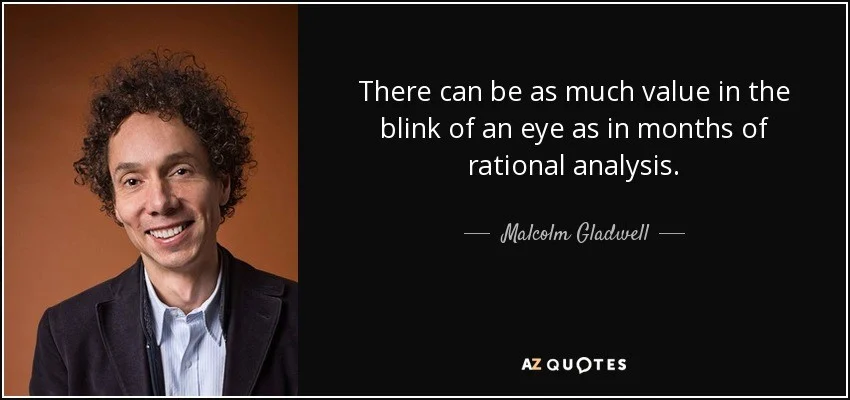
In Blink, Malcolm Gladwell explores how our brains make split-second decisions – often faster and more accurately than we realise. He calls it thin-slicing: the ability to make sense of a situation in an instant, based on subtle cues and deep experience.
While data and logic have their place, Blink reminds us that intuition is not guesswork – it’s informed instinct. And in high-pressure service environments, this instinct can be the difference between a robotic response and a remarkable moment.
At BIAMIC, we help teams recognise and refine this intuitive ability – so they can act with confidence, connection, and care, even when the clock is ticking.
1. Fast Doesn’t Mean Reckless – It Means Ready
Gladwell’s research shows that quick decisions can be smart ones – if they come from experience, not assumption.
Service Implication: Frontline staff often don’t have the luxury of deliberation. But they do have patterns to draw on – tone of voice, phrasing, posture, silence – that tell them what’s really going on.
Application: Coach teams to trust their instincts, especially in emotionally charged situations. Use team debriefs or BIAMIC’s Navigator logs to reflect on:
- “What tipped you off in that moment?”
- “What made you act quickly – and did it work?”
Reflex is not random. It’s trained wisdom in motion.
2. The First Few Seconds Matter Most
In Blink, Gladwell highlights how quickly people form impressions – sometimes within two seconds. In service, that moment shapes the entire interaction.
Application: Train teams to own the first moment:
- Eye contact
- A name used warmly
- An opening question that feels genuine, not scripted
Reflect on this question: “What impression are we creating in the first 10 seconds?”
Trust begins before words are fully formed.
3. Listening Is a Superpower – Especially to What’s Not Said
Much of thin-slicing happens in silence. A sigh. A hesitation. A change in pace. Intuition picks up what data can’t capture.
Service Implication: Empathetic service isn’t just about solving the problem. It’s about sensing what the real issue might be.
Application: Equip teams to listen beneath the surface. Ask:
- “What emotional cue did you notice?”
- “Was their frustration about the product – or how they felt treated?”
Often, what isn’t said is what matters most.
4. Bias Can Distort Instinct – But Awareness Can Sharpen It
Gladwell warns that while intuition is powerful, it can be skewed by bias – especially unconscious ones. The key is awareness.
Application: Use training to surface and examine biases:
- Who gets the benefit of the doubt?
- Who gets dismissed quickly?
- Where might assumptions be shaping our tone?
Build diversity of perspective into decision-making and service design.
Healthy instinct is guided by humility.
5. Practice Sharpens Intuition
The best way to get better at intuitive decision-making? Practice. Reflection. Feedback.
Application: Use real service scenarios in team training. Ask:
- “What did you sense here?”
- “What would you do differently next time?”
Use Navigator to log not just what happened, but how it felt. Encourage teammates to name the moment they “just knew.”
Intuition becomes intelligence when you study your own gut.
Why This Matters at BIAMIC
At BIAMIC, we believe service excellence lives in the moment between reaction and response – and Blink reminds us that this moment is not empty. It’s packed with insight.
That’s why we train teams not just to follow process – but to develop perception. To notice. To adapt. To trust their sense of what a moment needs, and to act on it.
Because when service feels timely, tuned-in, and human, it creates loyalty that no script can replicate.
Want to help your team trust their instincts – and sharpen them over time? Let’s build those reflexes together.
Make a booking to chat about how this could best serve you.