
Core Business Challenges – What’s at Stake
What Lies Beneath Service Challenges
When service falters, the first things we notice are on the surface. Complaints rise, ratings dip, repeat business softens and profitability feels under pressure. These are important, but they are lagging indicators. They tell us that something has already gone wrong. They do not tell us why.
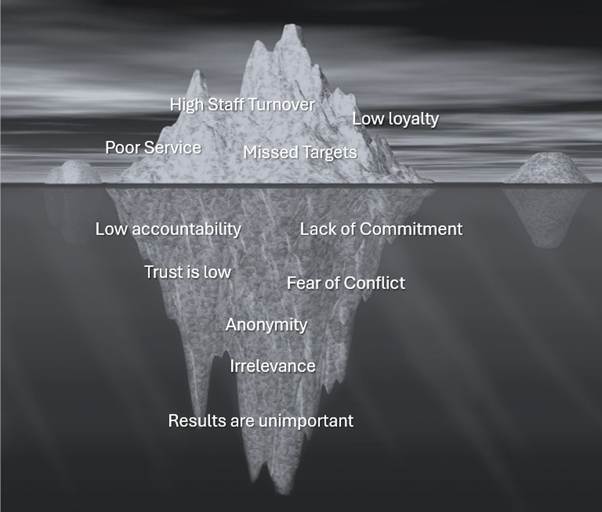
The iceberg effect
Above the waterline you see:
- Customer dissatisfaction and rework
- Slower growth in high value segments
- Strained margins from recovery effort
- Rising staff fatigue and turnover
Below the waterline you often find:
- Leadership signals that are mixed or inconsistent
- Purpose that is not felt in the day to day
- Processes that are efficient on paper but clumsy in real life
- Limited autonomy at the frontline, which slows care and initiative
- Low psychological safety, which suppresses honest feedback
- A reactive mindset that rewards firefighting rather than foresight
If we use only surface fixes, such as a new script or a short campaign, the pattern returns. Customers and staff sense the gap between words and reality, and trust erodes.
How to look below the surface
Ask practical questions that expose cause, not only symptom.
- Are leaders modelling the behaviour we ask of teams
- Can people explain in plain language why their work matters
- Where does the process make it hard to do the right thing quickly
- What decisions can the frontline make without escalation
- How easy is it to raise a concern without fear of blame
- Which problems do we keep solving again because no one owns the root
Map one or two customer journeys and then mirror them with the internal journey that supports them. The friction points usually match. Where the handover is messy inside, the customer experience is rough outside.
What to change first
Start with moves that compound.
- Align leadership on a few non-negotiables
Choose three behaviours that will signal the culture you want. Make them visible in meetings, reviews and recognition. - Connect purpose to practice
Translate the purpose into simple service promises. Show how each role contributes. Replace slogans with examples. - Redesign moments that block care
Shorten approval paths. Provide clear guardrails for discretion. Make the right action the easiest action. - Strengthen psychological safety
Normalise debriefs after tough moments. Thank people for surfacing issues early. Coach for curiosity before judgement. - Capture and circulate stories
Small wins teach faster than documents. Share real examples that show the culture in motion. Link each story to the behaviour you want repeated.
How the Moments that Matter workshops help
The workshops guide teams to move from symptom to cause and from cause to action.
- Discovery conversations surface what is really happening in the in-between moments
- Simple journey mapping reveals where process and experience diverge
- Practical tools help leaders architect the environment rather than micromanage people
- Frontline teams learn to prepare, notice, and apply signature touches with confidence
- Follow up rhythms turn new behaviour into habit
The lesson of the iceberg is clear. The visible problem is seldom the full problem. Organisations that are willing to look beneath the surface, and then act on what they find, are the ones that turn service excellence into a daily reality. What you do in the in-between is what makes the moment matter.
Make a booking to chat about how this could best serve you.