
Focus, Leverage, Engagement, and Accountability
Applying the 4 Disciplines of Execution to Service Excellence
The 4 Disciplines of Execution (4DX), developed by Chris McChesney and colleagues, is a battle-tested framework designed to close the gap between strategy and action. In environments where service teams are constantly caught in the whirlwind of daily demands, 4DX offers a way to drive sustained improvement without overwhelming the system.
Service excellence often suffers not because teams don’t care, but because there is too much going on – too many metrics, too many initiatives, and too little clarity. The 4DX framework brings relief by focusing energy on what matters most, helping individuals and teams not only to perform better, but to feel that their contributions are purposeful and impactful.
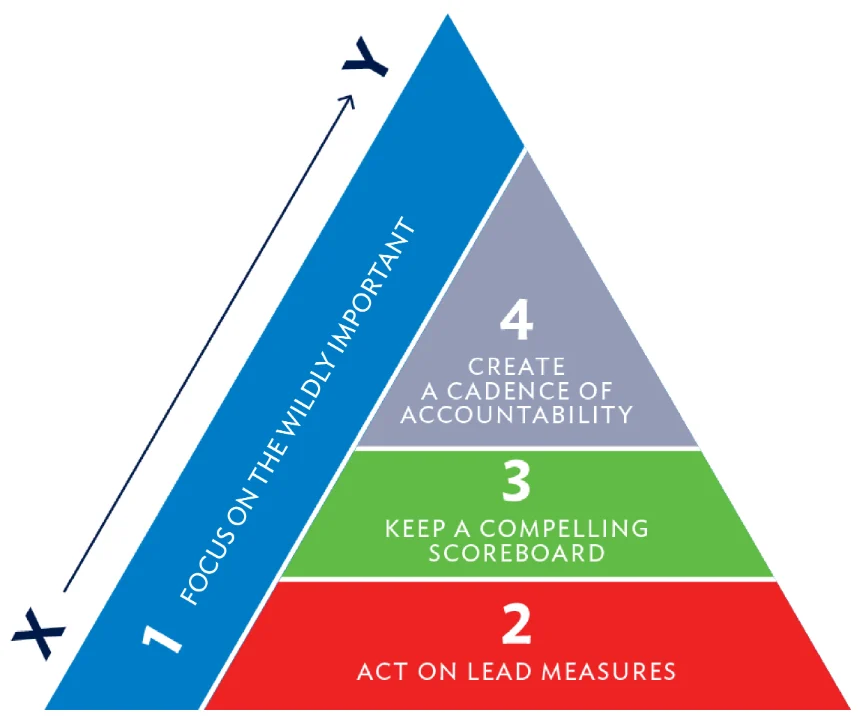
Discipline 1: Focus on the Wildly Important
What it means: Identify the one or two critical goals that will make the biggest difference and give them your full attention.
Service Application: Instead of drowning in dozens of KPIs, service teams rally around a single service improvement goal that elevates the customer experience. This might be reducing friction, increasing moments of delight, or improving first-contact resolution. When everything is a priority, nothing gets the full focus it needs.
Example: A team may choose to focus on “creating one memorable moment per customer interaction” for 90 days. That becomes the wildly important goal. Everything else is measured, but this is where the energy flows.
Why it matters: Clear goals sharpen attention and increase engagement. People want to know what success looks like today – not just at the end of the quarter.
Discipline 2: Act on the Lead Measures
What it means: Measure the behaviours that drive results – not just the results themselves.
Service Application: Lag measures like customer satisfaction scores or resolution rates come too late to influence. Lead measures such as “number of meaningful acknowledgements offered” or “follow-up within one hour” are proactive and controllable.
Example: Use Navigator™ to track behaviours that predict success. Encourage teams to reflect on what they did, not just what happened. Consider metrics like “Did I offer a personal connection point during the interaction?” or “Was the issue followed up before the customer needed to check in?”
Why it matters: Lead measures give teams something to work on every day – something they can directly influence. This builds confidence and control.
Discipline 3: Keep a Compelling Scoreboard
What it means: People play differently when they’re keeping score. A simple, visible scoreboard builds energy and focus.
Service Application: Create visual scoreboards that show progress on lead measures in real time. Make it team-owned, encouraging a sense of shared momentum. The scoreboard should be simple enough to understand at a glance, and visible enough to remain top of mind.
Example: A wallboard or digital dashboard showing progress toward daily or weekly behavioural targets. Teams can celebrate wins as they happen. For example, marking each time a team member receives positive unsolicited customer feedback.
Why it matters: Visibility fuels accountability. When people see progress and momentum, they become more invested. Scoreboards are not about surveillance – they’re about ownership and celebration.
Discipline 4: Create a Cadence of Accountability
What it means: Weekly check-ins keep teams aligned, focused, and committed.
Service Application: Quick, rhythmic reviews where each team member reports on what they did, what they learned, and what they’ll do next. These meetings are energising, not punitive. The goal is learning, recommitment, and recognition.
Example: Navigator reflections serve as preparation for huddles. Each person shares one small win and one commitment for the coming week. Teams learn from each other’s stories and support progress without judgment.
Why it matters
Without rhythm, even the best intentions fade. Weekly cadence provides the structure needed to sustain the change and to foster ownership.
In Practice with BIAMIC
BIAMIC integrates 4DX into its coaching and workshop frameworks to help teams stay aligned on what matters most. Service excellence is not about fixing everything at once. It’s about focused, collective action on the few things that truly move the culture.
Whether it’s through the Moments That Matter workshops, Navigator™ tracking tools, or executive coaching, these disciplines are present throughout. They help teams replace chaos with clarity, confusion with consistency, and busyness with real behavioural progress.
The result? Less noise, more clarity – and real momentum in building teams that delight customers on purpose.
Make a booking to chat about how this could best serve you.