
Beyond Expectation – Key principles from Unreasonable Hospitality
Key Principles from Unreasonable Hospitality by Will Guidara
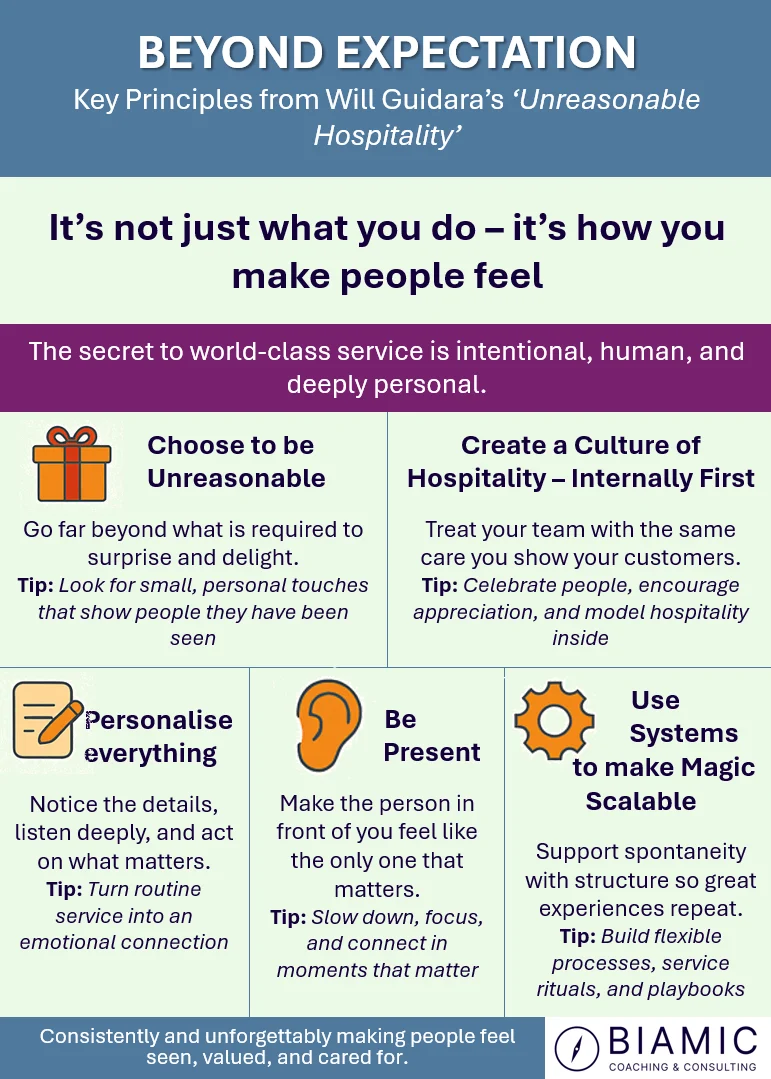
In Unreasonable Hospitality, Will Guidara shares the story of transforming Eleven Madison Park from a great restaurant into the best in the world – not by only obsessing over perfection, but by choosing to prioritise people and their experience above all. His philosophy is simple but profound: service is not about what you do, it’s about how you make people feel.
Here are the key principles that define this approach and offer powerful lessons for any leader or team aiming to create a culture of exceptional service.
1. Choose to Be Unreasonable
What it means: Being “unreasonable” means going far beyond what is required or expected. It means making choices that surprise and delight, even if they seem impractical or inefficient on the surface.
Why it matters: The most memorable experiences are the ones that feel personal, emotional, and completely unexpected. These moments create emotional connection, loyalty, and advocacy.
Application:
- Give your team permission to say “yes” in creative ways.
- Look for the small, thoughtful touches that show customers they’ve been seen.
- Make generosity and spontaneity part of the system.
2. Create a Culture of Hospitality – Internally First
What it means: You cannot deliver hospitality externally unless you practise it internally. Culture is built from the inside out, one moment of care at a time.
Why it matters: When teams feel respected, supported, and valued, they naturally pay that forward. Hospitality becomes a shared value, not just a customer-facing performance.
Application:
- Celebrate the team, not just outcomes.
- Encourage acts of appreciation between colleagues.
- Treat internal interactions with as much intentionality as customer ones.
3. Personalise Everything
What it means: True hospitality is not transactional – it is personal. It requires noticing the details, listening actively, and acting on what matters to each individual.
Why it matters: People don’t remember what was done for them – they remember how it made them feel. Personalisation turns routine into resonance.
Application:
- Pay attention to cues, preferences, and feedback.
- Create systems to capture and act on personal insights.
- Empower team members to act on what they notice.
4. Be Present
What it means: Presence is the ability to slow down and fully engage in the moment, even in high-pressure environments. It means making the person in front of you feel like the only one that matters.
Why it matters: People can sense when they are being rushed, ignored, or treated like a task. Presence communicates value.
Application:
- Train teams to pause, listen, and connect.
- Reduce multitasking in moments that matter.
- Honour the human being, not just the process.
5. Use Systems to Make Magic Scalable
What it means: Hospitality thrives in spontaneity, but it becomes sustainable when supported by thoughtful systems. Great experiences can be repeatable without being robotic.
Why it matters: Consistency and creativity can coexist. Systems ensure that teams have the tools, resources, and structure to keep delighting customers—without burning out.
Application:
- Build processes that support flexibility.
- Include service rituals that leave room for improvisation.
- Capture best moments and turn them into shareable playbooks.
In Practice with BIAMIC
Will Guidara’s principles align closely with BIAMIC’s mission to elevate service from function to identity. Whether it’s empowering frontline teams, shaping service rituals, or using Navigator™ to reflect on moments that matter, the goal remains the same:
To make people feel seen, valued, and cared for – consistently and unforgettably.
Because unreasonable hospitality is not about extravagance. It’s about intentionality, humanity, and a relentless commitment to making moments matter.
Make a booking to chat about how this could best serve you.