
In Search of Excellence
Timeless Lessons for a Service Culture That Lasts
When In Search of Excellence was first published in the early 1980s, it became a landmark in business thinking. Tom Peters and Robert Waterman studied high-performing companies and distilled what made them consistently successful.
Decades later, many of those lessons still shape what we know about great service cultures. Excellence, they found, isn’t a department – it’s a way of working.
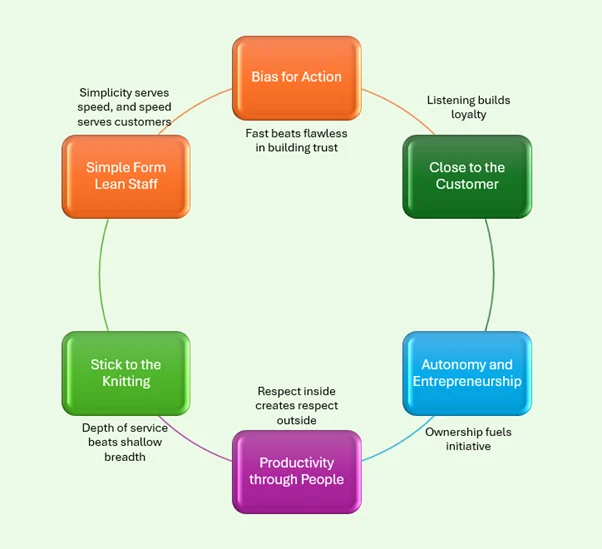
1. A Bias for Action
Excellent companies don’t overanalyse themselves into paralysis. They act, experiment, and learn.
Service Implication:
When a customer has a problem, speed matters as much as accuracy. Delays create frustration – even if the eventual answer is right.
Application:
Give teams authority to act immediately on most service issues. Build a culture where trying and improving beats waiting for perfection.
Fast beats flawless when it comes to customer trust.
2. Close to the Customer
Top companies obsess over knowing their customers deeply and personally.
Service Implication:
Service excellence starts with listening – not just to feedback forms, but to the little signals customers give every day.
Application:
Encourage staff to notice customer preferences, recall past interactions, and follow up. Small acts of recognition build loyalty faster than promotions.
Customers stay loyal to people who know them.
3. Autonomy and Entrepreneurship
Great companies trust their people to act like owners, not just employees.
Service Implication:
When people own their work, they don’t look for ways to cut corners – they look for ways to delight customers.
Application:
Give frontline teams scope to adapt service to the moment. Encourage them to test new ideas and share what works.
Ownership fuels initiative.
4. Productivity Through People
Peters and Waterman found that the most successful companies respected and valued their people at every level.
Service Implication:
A respected employee becomes a respectful service provider. Internal culture shapes external experience.
Application:
Recognise contributions regularly. Remove barriers that make it hard for employees to serve well.
Treat employees as you want them to treat customers.
5. Stick to the Knitting
Excellent companies focus on what they do best.
Service Implication:
Overstretching your service offering dilutes quality. Better to excel in your core service than to offer everything poorly.
Application:
Identify your service “sweet spot” and double down on it. Build systems and training around your strengths.
Excellence comes from depth, not breadth.
6. Simple Form, Lean Staff
Overcomplication kills responsiveness.
Service Implication:
The more layers between the customer and the decision-maker, the slower the service.
Application:
Streamline communication and approvals. Put decision-making as close to the customer as possible.
Simplicity serves speed – and speed serves customers.
Why This Matters at BIAMIC
In Search of Excellence reminds us that greatness in service doesn’t come from a single breakthrough – it comes from habits, values, and choices repeated every day.
At BIAMIC, we help organisations rediscover these timeless truths and bring them to life in ways that make service excellence not just possible, but inevitable.
Excellence isn’t found – it’s created, daily.
Make a booking to chat about how this could best serve you.