
Navigating Crucial Conversations
Insights from Joseph Grenny and TeamInsights from Joseph Grenny and Team
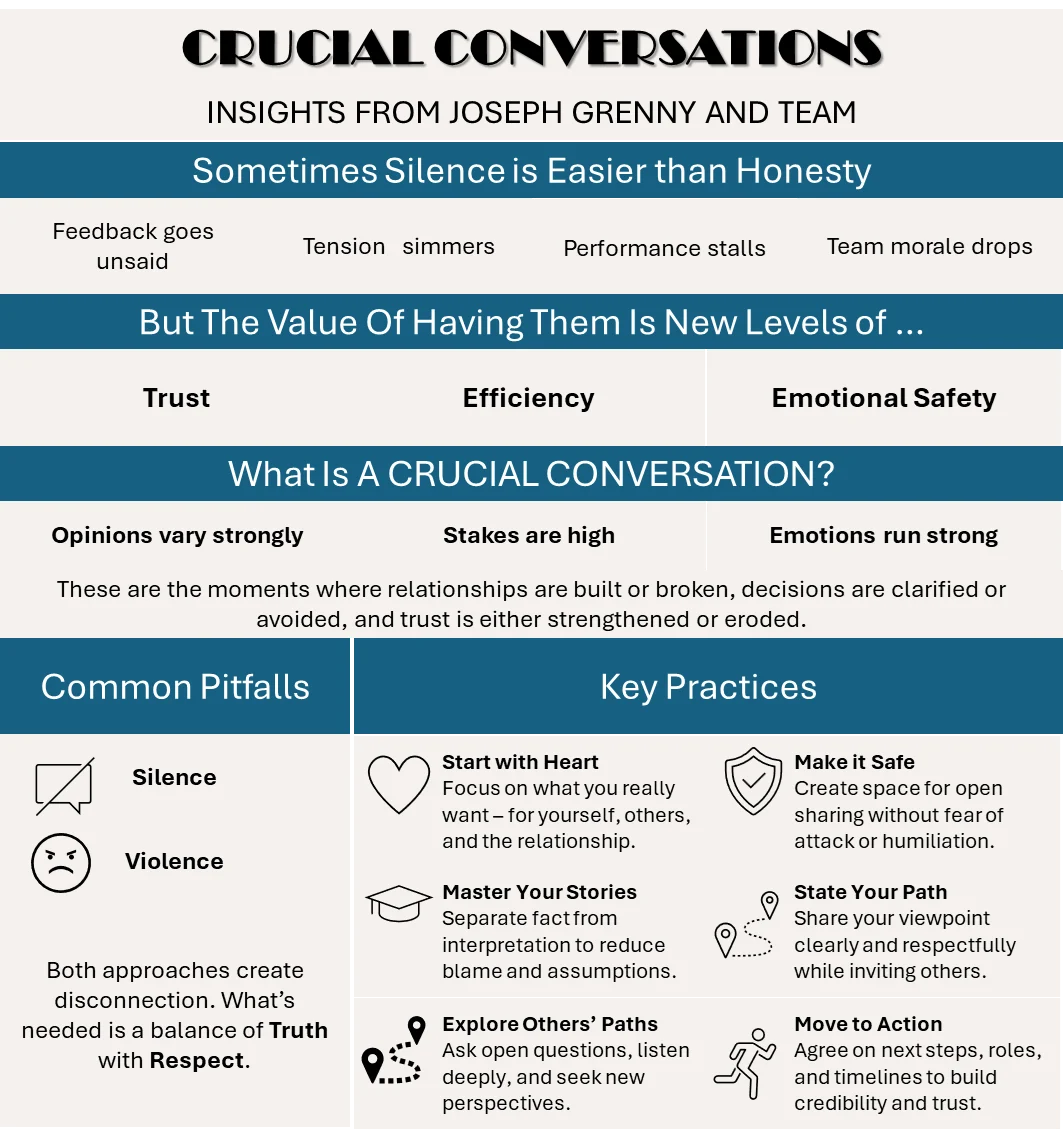
In every organisation, there are moments when silence is easier than honesty. Feedback goes unsaid, tension simmers, and performance stalls – not because people don’t care, but because the conversation feels too risky.
Joseph Grenny and his co-authors, in their best-selling book Crucial Conversations, provide a powerful framework for navigating these high-stakes moments with clarity, courage, and care. Their message is clear: the health of a culture is shaped by the conversations people are not having.
When people learn to engage in crucial conversations well, they unlock new levels of trust, efficiency, and emotional safety. Organisations begin to shift from environments of fear or avoidance into ones of openness, accountability, and innovation.
What is a Crucial Conversation?
A conversation is considered “crucial” when:
- Opinions vary
- Stakes are high
- Emotions run strong
These are the moments where relationships are built or broken, decisions are clarified or avoided, and trust is either strengthened or eroded. The ability to navigate them well often determines the success of a leader, a team, or an entire culture.
Common Pitfalls
When people face difficult conversations, they typically fall into one of two traps:
- Silence: Withholding concerns, masking emotions, or withdrawing from the discussion. This may feel polite in the moment but creates confusion and resentment over time.
- Violence: Speaking with sarcasm, criticism, or aggression in ways that shut others down. It might feel like being direct, but it damages relationships and creates fear.
Both approaches create disconnection. What’s needed is a third path – one that balances truth with respect.
Key Practices from Crucial Conversations
1. Start with Heart
Focus on what you really want – for yourself, for others, and for the relationship. When intentions are clear and anchored in respect, conversations become safer. This practice helps shift from defensiveness to purpose.
2. Make it Safe
When people feel threatened, they stop listening. Building safety means creating space where people can share openly without fear of attack or humiliation. It requires empathy, neutrality, and the ability to step back and check your tone and presence.
3. Master Your Stories
We often tell ourselves stories about others’ motives. These narratives shape our emotions – and our behaviour. Learning to separate fact from interpretation opens the door to understanding and connection. It also interrupts the cycle of blame and assumption.
4. State Your Path
Share your viewpoint clearly and respectfully. Use facts, describe your story, and invite others to share theirs. The goal isn’t to win – it’s to learn. This invites curiosity and shows respect for the other person’s reality.
5. Explore Others’ Paths
Curiosity changes everything. By asking open questions and listening deeply, new perspectives emerge and defensiveness drops. This is where shared understanding begins, and where long-standing issues can finally be addressed.
6. Move to Action
Conversations that don’t lead to clear outcomes create frustration. Agree on next steps, roles, and timelines. Follow-through is essential for building credibility and trust. A conversation without resolution leaves space for assumptions to return.
Why This Matters in a Service Culture
In service environments, unresolved tension spreads quickly. A team that avoids crucial conversations becomes reactive, fragmented, and prone to misunderstanding. People begin to protect themselves rather than support one another. Decisions are second-guessed, and energy is lost.
On the other hand, a team that engages openly and constructively builds resilience, clarity, and shared ownership. Issues get addressed early. Feedback becomes normal. Relationships are strengthened rather than strained.
At BIAMIC, this practice is essential. Whether in workshops, coaching sessions, or service improvement engagements, building the ability to have honest, respectful, and productive dialogue is key to long-term cultural health. Crucial conversations are not just tools – they are signals of maturity, clarity, and shared values.
Because in the end, the culture is shaped not just by the values on the wall – but by the conversations in the room.
Make a booking to chat about how this could best serve you.