
The Dignity Effect
Why Great Service Starts with Respect, Not Rules
In many service organisations, training begins with standards: say the customer’s name, smile, follow the checklist, resolve the issue. These are important. But they are not the heart of service.
At the heart of service is dignity – the quiet but powerful belief that every person matters.
When dignity is present, people feel seen. When it’s absent, even a perfectly executed transaction can leave someone feeling small.
At BIAMIC, we believe dignity is the starting point for everything: leadership, coaching, customer interaction, and team culture. It’s not just a value. It’s an experience.
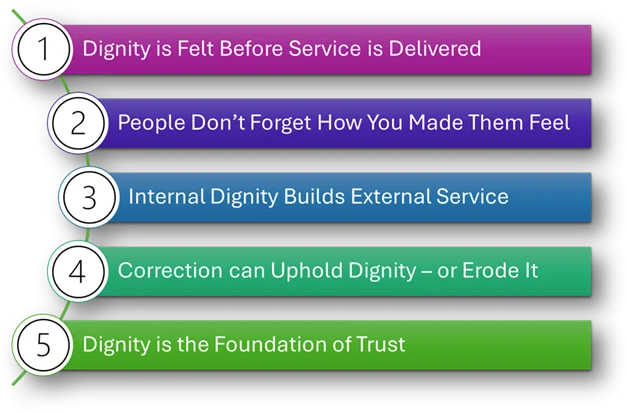
1. Dignity is Felt Before Service is Delivered
Before you’ve said a word, your posture, tone, and presence communicate whether someone matters to you. And people are quick to pick up on it – especially customers who are already vulnerable, frustrated, or unsure.
Application:
Coach your team to treat every customer as if their story matters. Pause before the rush. Make eye contact. Listen with curiosity. Let your presence say: “You’re safe here.”
You can’t deliver care if you don’t first convey worth.
2. People Don’t Forget How You Made Them Feel – Especially When They Felt Small
We tend to remember moments where our dignity was violated – being ignored, spoken over, dismissed, or treated like a problem.
In service, even unintentional slights can have a lasting emotional impact.
Application:
Train for empathy, not just efficiency. Invite feedback on moments that felt off. Celebrate the stories where someone turned a difficult interaction into a moment of affirmation.
Restoring dignity may be the most important part of resolving an issue.
3. Internal Dignity Builds External Service
Teams who feel invisible, undervalued, or micromanaged will struggle to offer warmth to others. Culture flows from the inside out.
Application:
Make dignity part of your leadership rhythm. Acknowledge effort. Ask for input. Respect time. Listen fully.
When team members feel dignified, they don’t just comply – they care.
The best customer service starts with colleague service.
4. Correction Can Uphold Dignity – or Erode It
Accountability is essential. But the way we deliver correction says everything about the culture we’re building.
Application:
Offer feedback that focuses on behaviour, not identity. Say:
“That response missed the mark – let’s talk about why,” rather than, “You’re not very good at this.”
Let feedback be firm and honouring. Protecting dignity doesn’t mean avoiding truth. It means delivering it with care.
You can correct without crushing.
5. Dignity Is the Foundation of Trust
Customers return when they feel respected. Employees stay when they feel valued. Teams thrive when they know their voice matters.
Dignity is not a “soft” concept. It’s a hard line – one that defines whether people want to come back, contribute, or grow.
Application:
Embed dignity into every system – onboarding, escalation, training, recognition, and recovery. Make it a non-negotiable.
Dignity isn’t an outcome. It’s a starting point.
Why This Matters at BIAMIC
We work with leaders and teams who want more than good service – they want meaningful service.
That begins with a culture of dignity: where people are seen, voices are heard, and interactions are grounded in respect.
In workshops, coaching, and through the BIAMIC Navigator™, we help teams reflect not just on what they’re doing – but how it’s landing.
Because no checklist can replace the feeling of being truly valued.
And once you’ve felt that – as a customer, as a colleague, or as a leader – you never forget it.
Want to build a service culture where dignity is felt in every interaction? Let’s start the conversation.
Make a booking to chat about how this could best serve you.