
The Signs of a Miserable Job
What Patrick Lencioni Teaches Us About Workplace Fulfilment
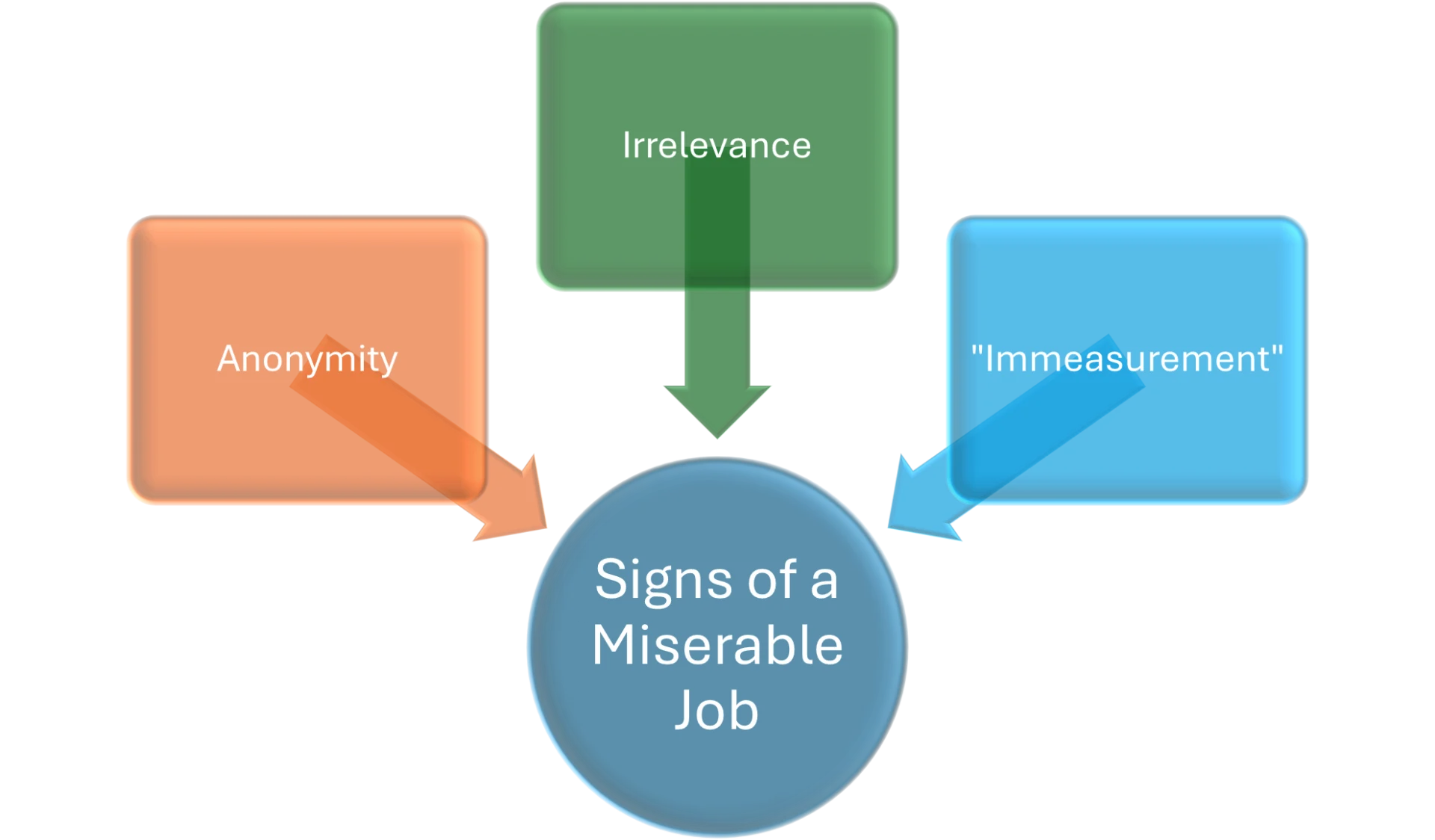
Why do so many people dread Monday mornings? According to Patrick Lencioni, it’s not simply about salary, workload, or even poor management. In his powerful leadership fable “The Three Signs of a Miserable Job,” Lencioni identifies three critical elements that make work unbearable, regardless of the role or industry.
More importantly, he offers a clear, practical pathway to help leaders transform workplaces into environments where people feel seen, valued, and motivated to contribute.
The Three Signs of a Miserable Job
1. Anonymity
People need to feel known. When employees believe their leaders don’t know them or care about them as individuals, their sense of purpose erodes. This isn’t about being best friends – it’s about taking the time to show genuine interest in who a person is beyond their job description.
Implication: Without personal connection, employees disengage. They may show up physically, but emotionally, they’ve already checked out.
Solution: Leaders must invest in real conversations, asking about team members’ interests, families, motivations, and aspirations. These small moments of connection go a long way in building trust and commitment.
2. Irrelevance
Everyone wants to know that their work matters. If a team member doesn’t understand how their role impacts the lives of others – colleagues, customers, or the broader organisation – they begin to question the value of their effort.
Implication: People who feel irrelevant become indifferent. They lose motivation and begin to treat their work as transactional, not purposeful.
Solution: Leaders need to regularly remind team members how their work makes a difference. Telling stories, celebrating impact, and connecting day-to-day tasks with broader outcomes helps reignite meaning.
3. Immeasurement
When employees have no clear sense of what success looks like or how they’re doing, frustration builds. People want to know whether they’re winning. Vague praise or subjective judgment creates confusion rather than clarity.
Implication: Lack of measurable feedback leads to self-doubt, comparison, or complacency.
Solution: Clear, relevant metrics empower employees to track their own progress. When individuals can see the results of their work in real time, they gain confidence, momentum, and ownership.
How This Applies to Culture
These three signs – anonymity, irrelevance, and immeasurement – aren’t just job issues. They are cultural issues. When left unchecked, they shape the very DNA of a workplace, quietly draining energy and morale.
When addressed, they unlock a new culture – one built on clarity, care, and shared accountability. Teams become more connected. Leaders become more human. And employees become more engaged, loyal, and proud of their work.
Integrating Lencioni’s Model with BIAMIC
At BIAMIC Coaching and Consulting, these ideas resonate deeply. The principles behind the BIAMIC Navigator™, coaching programmes, and service excellence workshops are all aligned to restore meaning, connection, and clarity in daily work.
Helping people feel known, helping teams see their impact, and helping organisations measure what matters, these are not just ideals. They’re essential levers for culture change.
Because no one should feel miserable in their job. And with the right leadership, no one has to.
Make a booking to chat about how this could best serve you.