
Unlocking Service Brilliance with ‘Rookie Smarts’
Inspired by Liz Wiseman‘s ‘Rookie Smarts‘
In a world that celebrates experience, Liz Wiseman’s Rookie Smarts offers a surprising challenge: what if inexperience is actually an asset? When it comes to creating a culture of service excellence, this message couldn’t be more timely.
Wiseman explores how rookies – those entering a role or environment for the first time – often outperform veterans in key ways. Their mindset, energy, and learning orientation allow them to adapt quickly, ask better questions, and stay focused on the customer rather than assumptions. Rather than becoming bound by “the way it’s always been done,” they operate with a keen awareness that they have something to prove – and much to learn.
Let’s consider how this thinking reshapes the way we approach frontline service, leadership, and team culture.
1. The Power of Curiosity
Rookies don’t pretend to know it all. They ask. They explore. They challenge assumptions and bring fresh perspectives to everyday interactions. This curiosity is a catalyst for both innovation and improvement.
Service Application:
When a team approaches each customer with fresh eyes, they’re more likely to spot opportunities to delight. Rather than delivering service from a script, they tune into what this customer really needs, right now. Curiosity helps uncover unstated needs, uncover inefficiencies, and inspire new ways of adding value.
Culture Shift:
Curiosity fuels continuous improvement. When teams feel safe to question, they also feel empowered to contribute. A curious culture is one where “why?” and “what if?” are welcomed, not shut down.
2. The Focus of a Beginner
Experienced professionals may juggle multiple priorities, sometimes losing sight of what matters most. Rookies, on the other hand, have fewer assumptions and tend to double down on mastering the essentials. They give disproportionate attention to the basics, which often leads to excellence.
Service Application:
Focusing on what matters most to the customer becomes easier when teams aren’t distracted by complexity. Rookies excel at learning quickly what matters and executing with intentionality. They listen attentively, seek clarity, and act decisively.
Culture Shift:
Simplicity isn’t naive. It’s often powerful. Building a service culture around the essentials of attentiveness, respect, responsiveness, and empathy can be more transformative than endless SOPs. A rookie approach simplifies the noise and prioritises impact.
3. Learning Agility Over Knowing It All
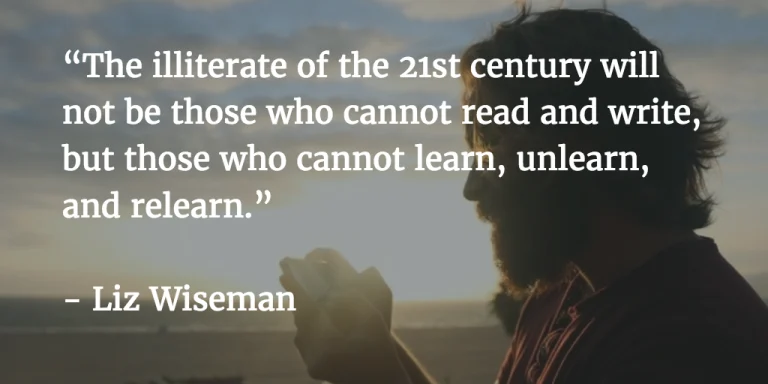
Wiseman reminds us that expertise can sometimes breed complacency. Rookies, by contrast, are wired for growth. They’re not encumbered by the need to defend their knowledge – they’re free to ask, to explore, to try, and to fail forward.
Service Application: The best service reps aren’t those who know everything – they’re the ones who never stop learning. They reflect, adapt, and improve every day. BIAMIC’s Navigator tool taps directly into this mindset, offering a structured way for every team member to log experiences and grow through reflection.
Culture Shift: A learning culture invites everyone to grow, regardless of tenure. Rookie thinking turns each day into a classroom. When learning becomes a habit, teams become more agile, innovative, and confident in their ability to evolve.
4. Collaborative Instincts
Rookies know they can’t do it alone. They lean on others, ask for help, and tap into collective wisdom. That instinct builds team strength. They are more likely to listen with humility and contribute without pretence.
Service Application:
When a team member is comfortable saying, “I’m not sure – let me find out for you,” they’re not showing weakness. They’re showing commitment. Customers respect honesty more than hollow certainty. Service becomes a shared responsibility.
Culture Shift:
A team that shares knowledge and supports one another builds momentum far faster than one where everyone is trying to prove their worth in isolation. Rookie energy dissolves silos and encourages peer learning.
5. Urgency and Resourcefulness
Rookies tend to work with a sense of urgency. They know they’re in unfamiliar territory, so they hustle to understand, to contribute, and to add value. That pressure can spark creativity and push them to find smarter, faster solutions.
Service Application:
When a rookie encounters an unfamiliar service situation, they’re likely to seek insight, test ideas, and go beyond the minimum. Their resourcefulness shows up as improvisation, empathy, and dedication.
Culture Shift:
Veteran team members can regain this sense of urgency by adopting a rookie mindset. Leaders can foster this by celebrating resourcefulness and encouraging experimentation, rather than penalising every misstep.
Why This Matters for BIAMIC
In many service environments, especially those with high attrition or entry-level teams, leaders often view rookie status as a liability. Rookie Smarts turns that notion on its head.
At BIAMIC Coaching and Consulting, this perspective is deeply embedded. Service excellence doesn’t begin with perfection – it begins with posture. A rookie posture. A readiness to listen, to learn, and to serve.
By tapping into the power of beginner’s energy, teams can break through stagnation, reawaken passion, and build a culture where curiosity, agility, and collaboration thrive.
And in that posture, some of the most extraordinary moments begin.
Make a booking to chat about how this could best serve you.